
Indonesia · Malaysia · Singapore
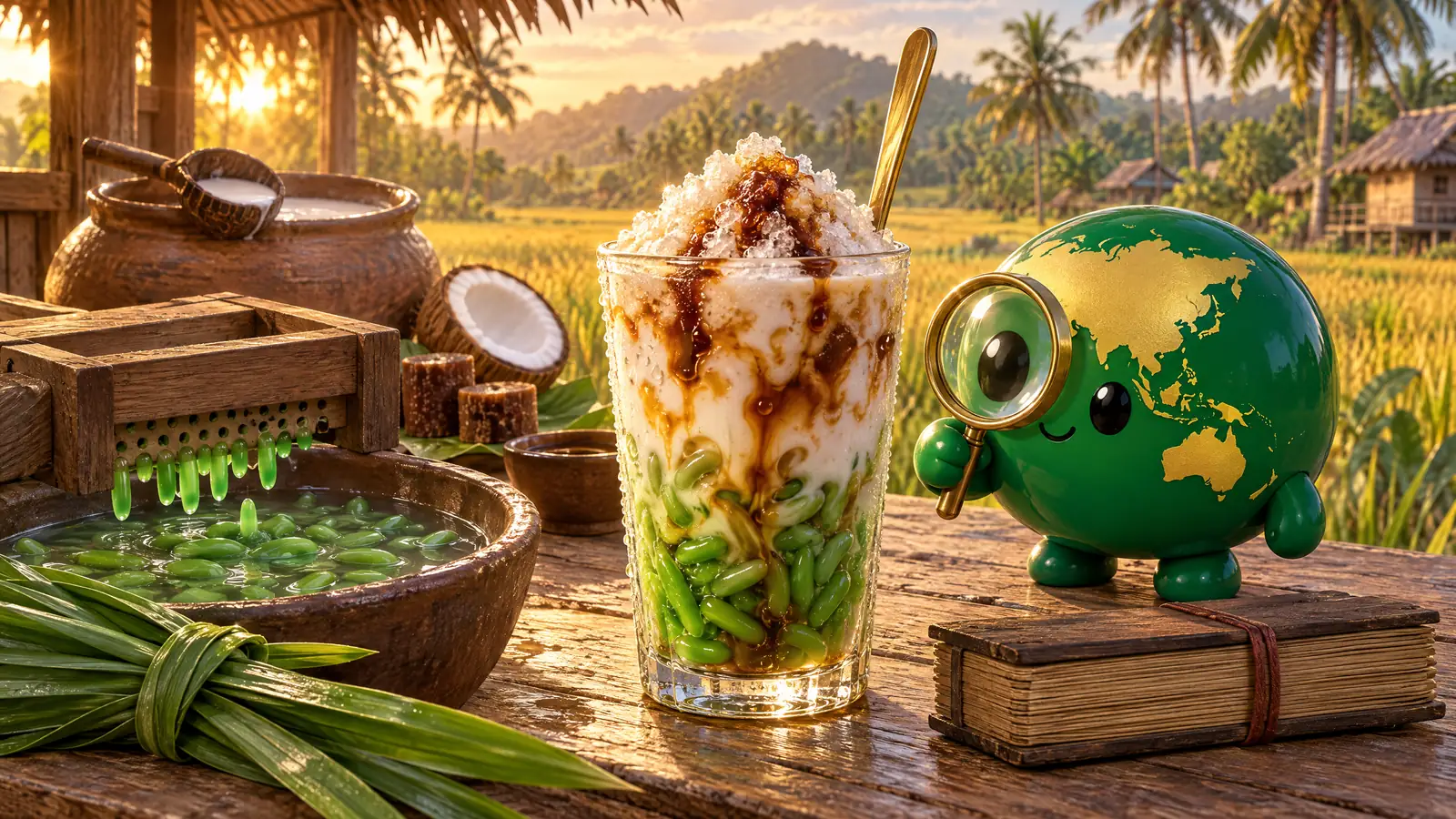
Cendol: a sweet with roots in a 12th-century text
Green rice-flour drops like cendol appear in a 12th-century Javanese text. Today Indonesia, Malaysia, Singapore and their neighbours all claim it.
The dessert on your table has a passport. Some of these go back to a manuscript, one to a shaved-ice cart.
Sweets travel well. Sugar, coconut, and ice all moved with trade goods and contact, and the desserts followed.
Some of these stories reach back a long way, to a Javanese manuscript from the 12th century. One begins with a Japanese shaved-ice cart in Manila. Between those two points sit the kuih of the Malay world, small, bright, and made in many shapes.
The lesson of this desk is contact. A new ingredient arrives. A cook tries it. A neighbour copies it. A dessert is born.
We follow each sweet from that first contact to the stall today.
Indonesia · Malaysia · Singapore
Green rice-flour drops like cendol appear in a 12th-century Javanese text. Today Indonesia, Malaysia, Singapore and their neighbours all claim it.
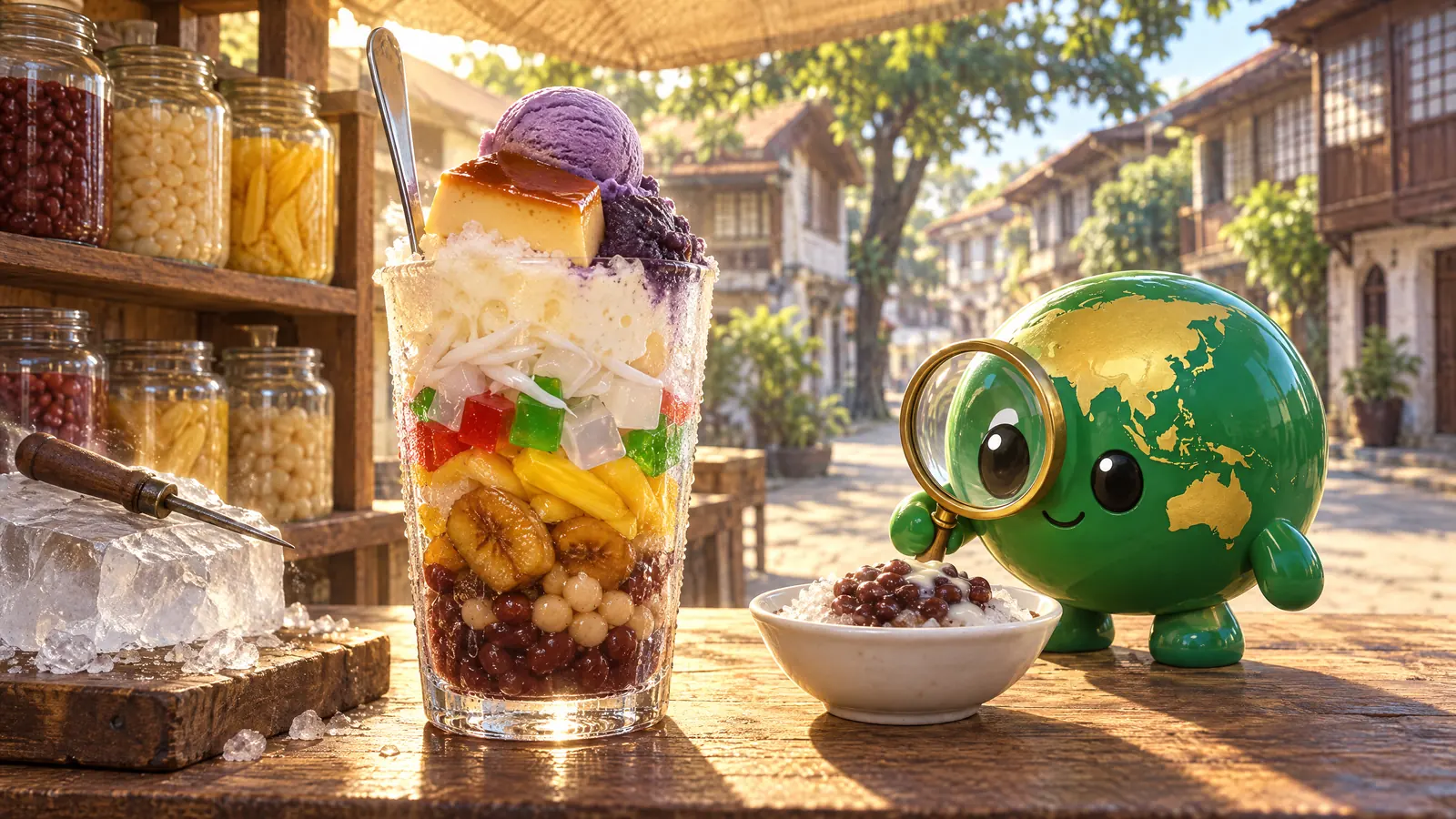
Before the war, Japanese vendors in Manila sold sweet beans over ice as mongo-ya. Filipinos piled on local treats and made the halo-halo you know.
Singapore · Malaysia · Indonesia
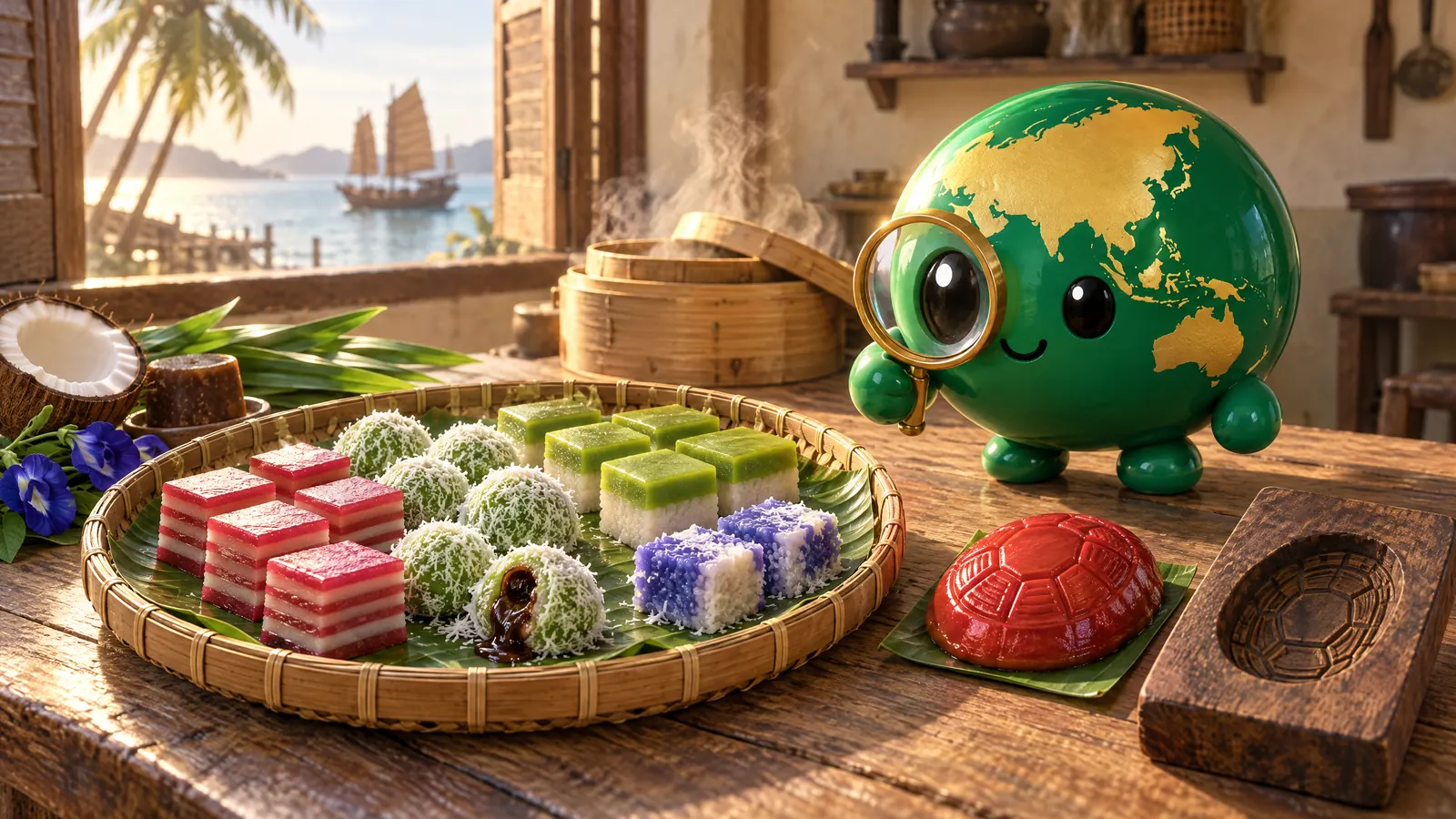
The word comes from the Chinese character 粿. The red tortoise-shaped ang ku kueh came from Fujian, and Peranakan cooks later made it fully their own.
| Cendol: a sweet with roots in a 12th-century text | Green rice-flour drops like cendol appear in a 12th-century Javanese text. Today Indonesia, Malaysia, Singapore and their neighbours all claim it. | Indonesia · Malaysia · Singapore |
|---|---|---|
| Kuih: from a Fujian tortoise cake to Nyonya kueh | The word comes from the Chinese character 粿. The red tortoise-shaped ang ku kueh came from Fujian, and Peranakan cooks later made it fully their own. | Singapore · Malaysia · Indonesia |
| Halo-halo: a dessert that began as Japanese shaved ice | Before the war, Japanese vendors in Manila sold sweet beans over ice as mongo-ya. Filipinos piled on local treats and made the halo-halo you know. | Philippines |
| Mango sticky rice and the royal kitchens of Rama V | Often traced to King Rama V's court in the late 1800s, when sticky rice was served with ripe mango, then spread from palace kitchens to street stalls. | Thailand · Laos · Cambodia · Vietnam |
| Durian: grown in Borneo long before any Western account | Indigenous people in Borneo and Sumatra farmed wild durian long before any Western account. The name comes from duri, the Malay word for thorn. | Malaysia · Indonesia · Thailand · Singapore · Philippines · Vietnam |
A new story publishes every weekday.
The monthly email
Get the best new stories once a month
One short email a month, free.
No spam. Leave with one click, any time.