
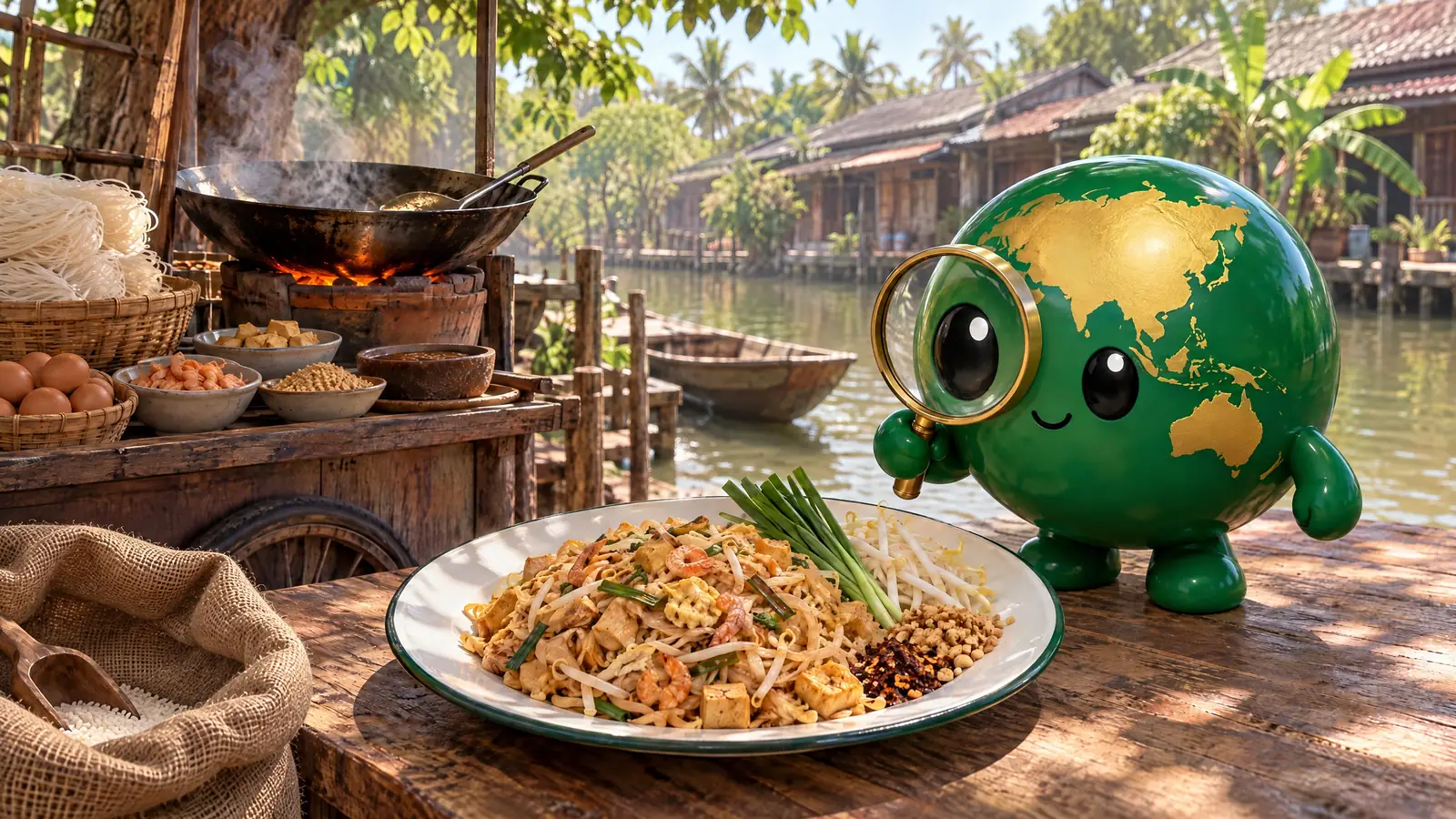
Pad thai and the 1930s rice shortage behind its rise
Pad thai's rise is tied to a 1930s campaign for a national dish during a wartime rice shortage, and historians still ask how much of that story is true.
Pad thai is younger than it looks. So is the tuk-tuk. So is Red Bull. Thailand's best-known things have shorter histories than you think.
Thailand's best-known things often have younger stories than people expect. Pad thai rose in the 1930s and 1940s, pushed by a government facing a rice shortage and building a new national identity. Historians still ask how much of that story is myth.
The tuk-tuk began life as the Piaggio Ape, an Italian delivery trike from 1948. Bangkok adapted it, and visitors named it for the sound of its engine. Red Bull started as Krating Daeng, a tonic that Chaleo Yoovidhya launched in 1976 for rural labourers.
Other stories are far older. Tom yum takes its name from two old Tai words: tom, to boil, and yam, to mix. A Khon performance is mentioned in a Thai poem from about 1529. Songkran began as a gentle rite of pouring scented water on Buddha images and on the hands of elders.
Many of these things are shared with neighbours. Satay came to Thailand from Java. Som tam is believed to have begun with the Lao. Khao soi grew from the noodles of Chinese Muslim traders who travelled through Shan State, Laos and Thailand. Many families, one dish.
This bureau lists every story tagged Thailand, desk by desk.
Pad thai's rise is tied to a 1930s campaign for a national dish during a wartime rice shortage, and historians still ask how much of that story is true.
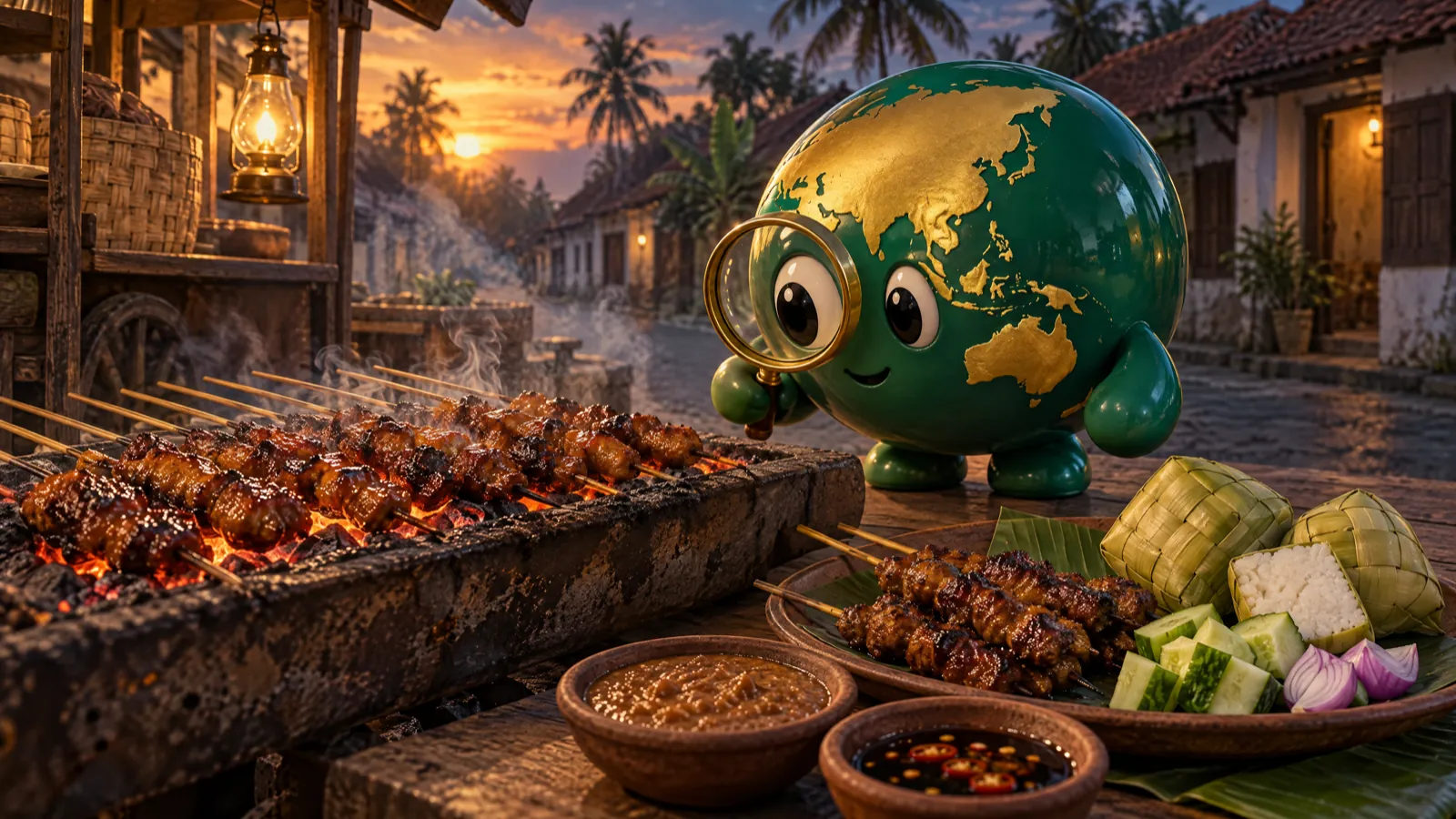
Satay is thought to come from the Indian kebab, itself from the Turkish one. Java's street cooks reshaped it before it crossed the strait.
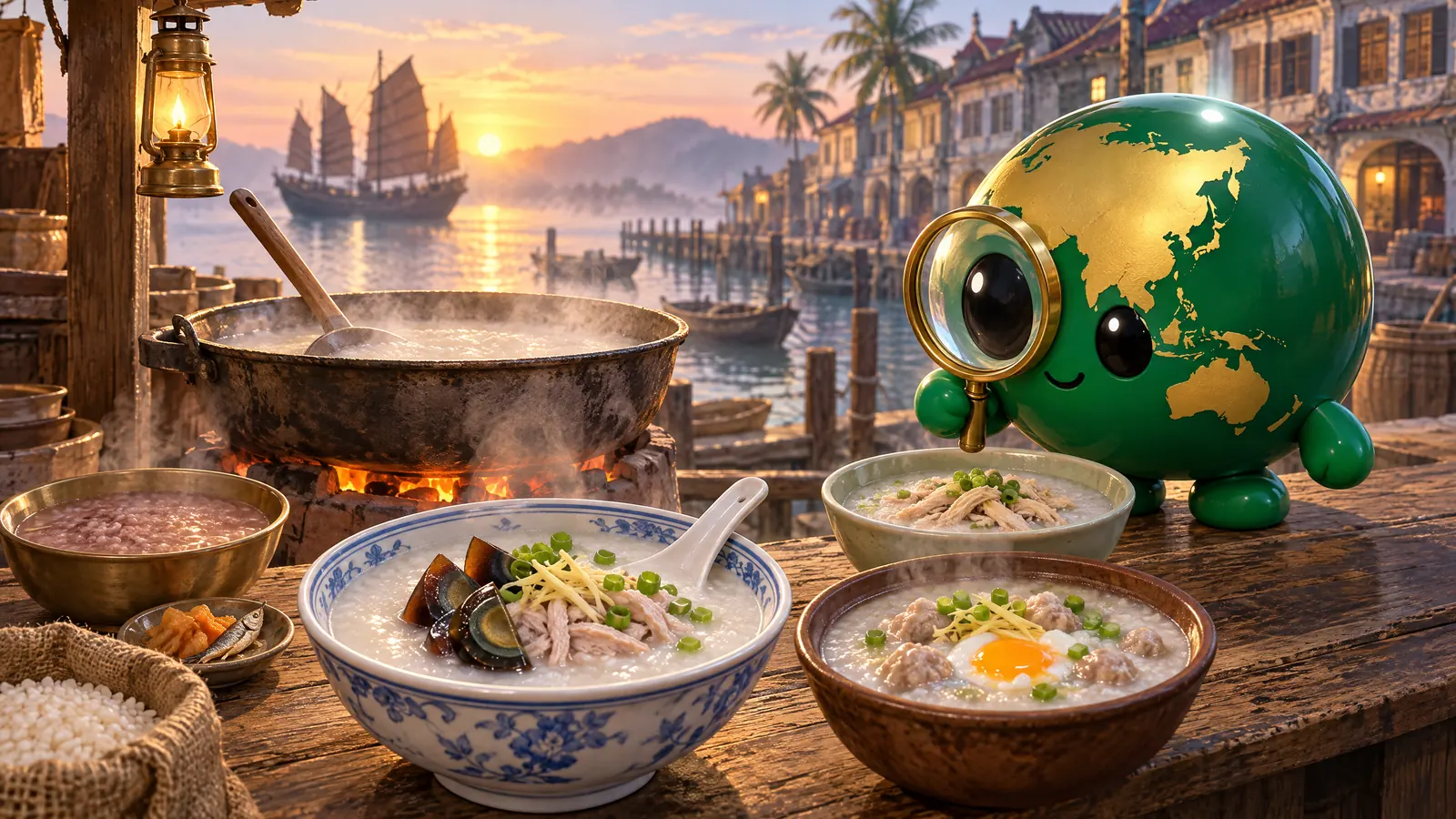
Rice porridge goes back about 3,000 years in China. Its English name, congee, comes from the Tamil word kanji, and the dish goes by many names across Asia.
| Satay: a kebab reworked on the streets of Java | Satay is thought to come from the Indian kebab, itself from the Turkish one. Java's street cooks reshaped it before it crossed the strait. | Indonesia · Malaysia · Singapore · Thailand |
|---|---|---|
| Congee: a Chinese rice porridge with a Tamil name | Rice porridge goes back about 3,000 years in China. Its English name, congee, comes from the Tamil word kanji, and the dish goes by many names across Asia. | Singapore · Malaysia · Indonesia · Philippines · Thailand |
| Pad thai and the 1930s rice shortage behind its rise | Pad thai's rise is tied to a 1930s campaign for a national dish during a wartime rice shortage, and historians still ask how much of that story is true. | Thailand |
| Mango sticky rice and the royal kitchens of Rama V | Often traced to King Rama V's court in the late 1800s, when sticky rice was served with ripe mango, then spread from palace kitchens to street stalls. | Thailand · Laos · Cambodia · Vietnam |
| Durian: grown in Borneo long before any Western account | Indigenous people in Borneo and Sumatra farmed wild durian long before any Western account. The name comes from duri, the Malay word for thorn. | Malaysia · Indonesia · Thailand · Singapore · Philippines · Vietnam |
| Belacan: one shrimp paste, many names across the region | Belacan, terasi, kapi. The paste likely began with the Cham and Mon peoples of mainland Southeast Asia, then spread to the islands under new names. | Malaysia · Singapore · Indonesia · Brunei · Thailand · Philippines |
| Kebaya: a Javanese court blouse with a Portuguese name | Its roots reach Java's Majapahit court, and its name likely came by sea from the Portuguese cabaya. Many homes across Southeast Asia still wear it today. | Indonesia · Malaysia · Singapore · Brunei · Thailand |
|---|
| Red Bull: it began as a Thai tonic for labourers | Before the silver can, there was Krating Daeng, a 1976 Thai tonic for rural workers. An Austrian partner, Dietrich Mateschitz, later took it worldwide. | Thailand |
|---|
A new story publishes every weekday.
The monthly email
Get the best new stories once a month
One short email a month, free.
No spam. Leave with one click, any time.