

Adobo: a Filipino method with a Spanish name
Long before the Spanish came, Filipinos kept meat in vinegar and salt. Spanish chroniclers gave it a word they knew: adobo, meaning marinade.
Adobo was a Filipino method long before it had a Spanish name. The same is true of more things here than you would guess.
Many Filipino things carry a Spanish name and a much older story. Adobo is the clearest case. Filipinos were preserving meat in vinegar and salt long before the Spanish came. Spanish chroniclers gave the method a word they knew, adobo, meaning marinade. Lechon is a Spanish word for roast suckling pig, but pig roasting in the islands has native roots and native stuffings such as lemongrass and tamarind leaves. Mano is Spanish for hand, po is a Filipino word of respect, and the custom itself is said to be pre-colonial.
Some stories came later and with a date. Sisig began as a sour relish. The sizzling pork version was created in 1974 by Lucia Cunanan, a vendor in Pampanga. After the Second World War, mechanics stretched and decorated leftover American jeeps into the jeepney. Jollibee began in 1975 as a Manila ice cream parlour.
Some stories are very old. The oldest evidence of betel chewing anywhere, more than 4,600 years old, comes from a burial site in Palawan.
The Philippines shares much with the region. Lumpia carries a Hokkien name. Pancit does too. One family of dishes, many kitchens.
This bureau lists every story tagged Philippines, desk by desk.
Long before the Spanish came, Filipinos kept meat in vinegar and salt. Spanish chroniclers gave it a word they knew: adobo, meaning marinade.
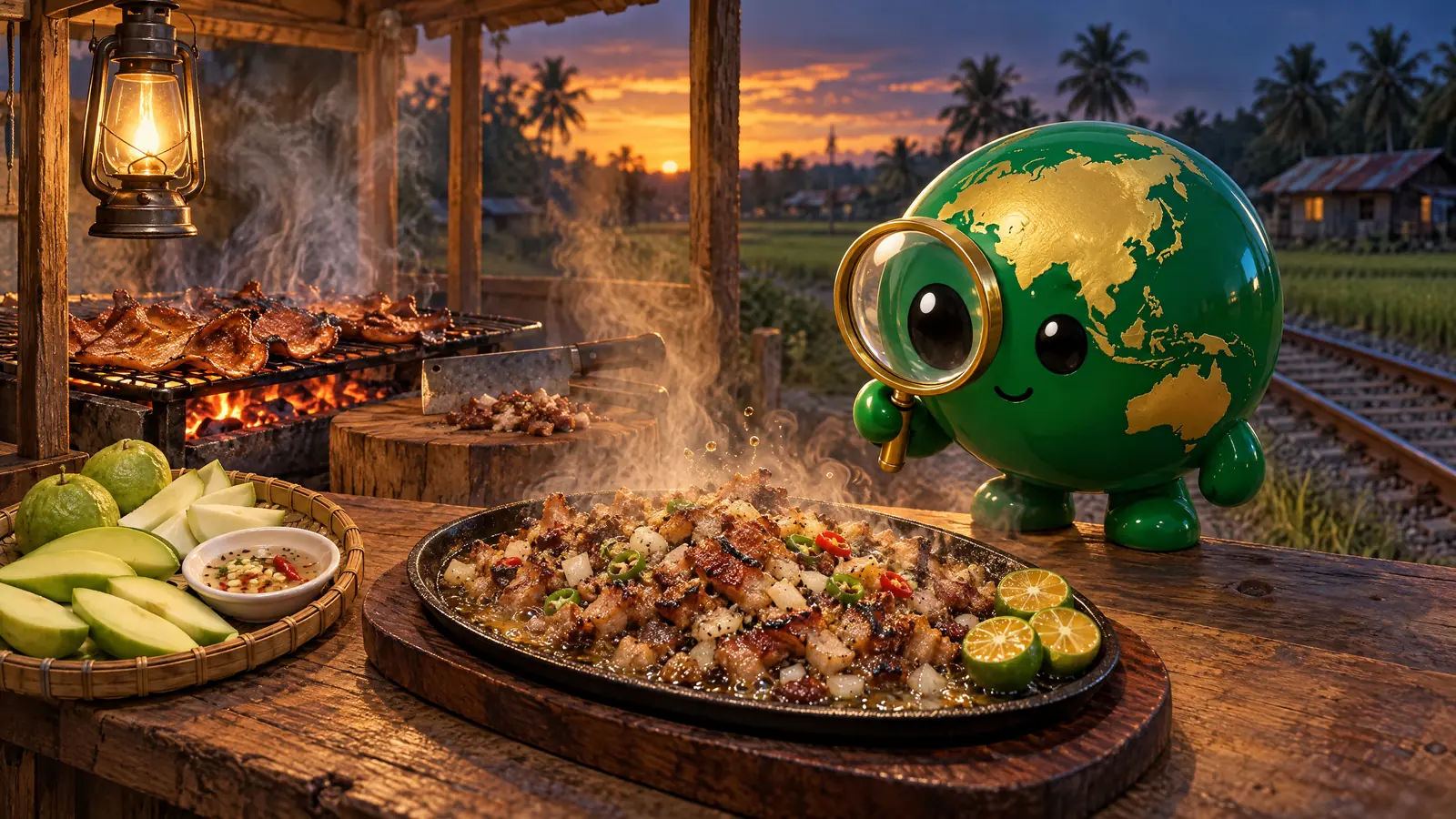
The old Tagalog name means to make sour, and it began as a relish. In 1974, a Pampanga cook made the sizzling pork version from airbase scraps.
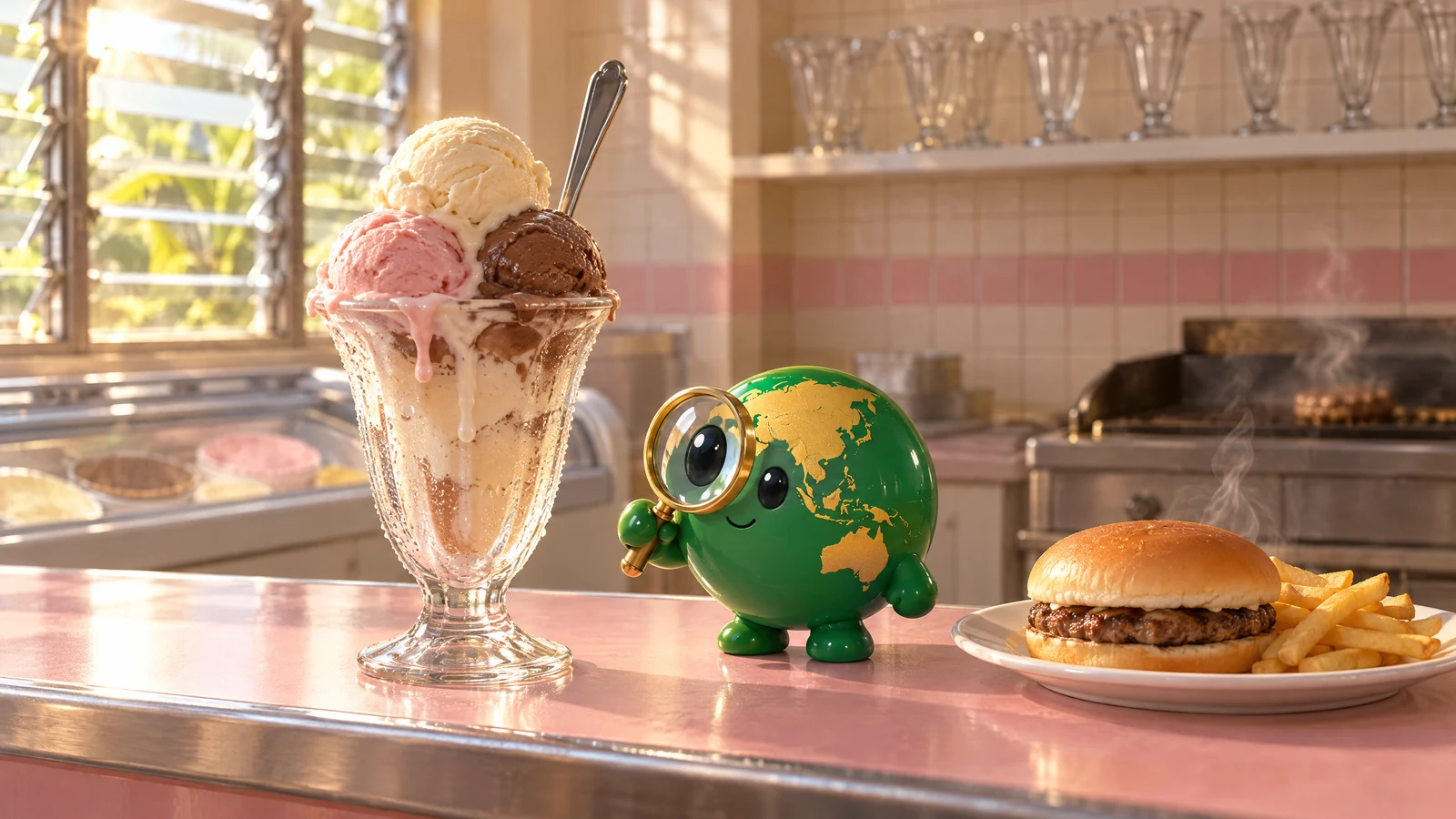
In 1975, a family in Manila sold ice cream. Customers kept asking for hot meals. That request built the Philippines' biggest fast-food chain today.
| Adobo: a Filipino method with a Spanish name | Long before the Spanish came, Filipinos kept meat in vinegar and salt. Spanish chroniclers gave it a word they knew: adobo, meaning marinade. | Philippines |
|---|---|---|
| Congee: a Chinese rice porridge with a Tamil name | Rice porridge goes back about 3,000 years in China. Its English name, congee, comes from the Tamil word kanji, and the dish goes by many names across Asia. | Singapore · Malaysia · Indonesia · Philippines · Thailand |
| Sisig: from sour relish to sizzling plate | The old Tagalog name means to make sour, and it began as a relish. In 1974, a Pampanga cook made the sizzling pork version from airbase scraps. | Philippines |
| Halo-halo: a dessert that began as Japanese shaved ice | Before the war, Japanese vendors in Manila sold sweet beans over ice as mongo-ya. Filipinos piled on local treats and made the halo-halo you know. | Philippines |
| Durian: grown in Borneo long before any Western account | Indigenous people in Borneo and Sumatra farmed wild durian long before any Western account. The name comes from duri, the Malay word for thorn. | Malaysia · Indonesia · Thailand · Singapore · Philippines · Vietnam |
| Belacan: one shrimp paste, many names across the region | Belacan, terasi, kapi. The paste likely began with the Cham and Mon peoples of mainland Southeast Asia, then spread to the islands under new names. | Malaysia · Singapore · Indonesia · Brunei · Thailand · Philippines |
| Barong Tagalog: a shirt woven from pineapple leaves | Piña cloth is made from pineapple leaf fibre. Woven by hand and cut Spanish-style, the shirt became a badge of Filipino identity in the 1800s. | Philippines |
|---|
| Jollibee: it started as a Manila ice cream parlour | In 1975, a family in Manila sold ice cream. Customers kept asking for hot meals. That request built the Philippines' biggest fast-food chain today. | Philippines |
|---|---|---|
| San Miguel: the brewery named after a Manila district | In 1890, a brewery opened in Manila under a Spanish royal charter. It took its name, San Miguel, from the riverside district where it stood. | Philippines |
A new story publishes every weekday.
The monthly email
Get the best new stories once a month
One short email a month, free.
No spam. Leave with one click, any time.