
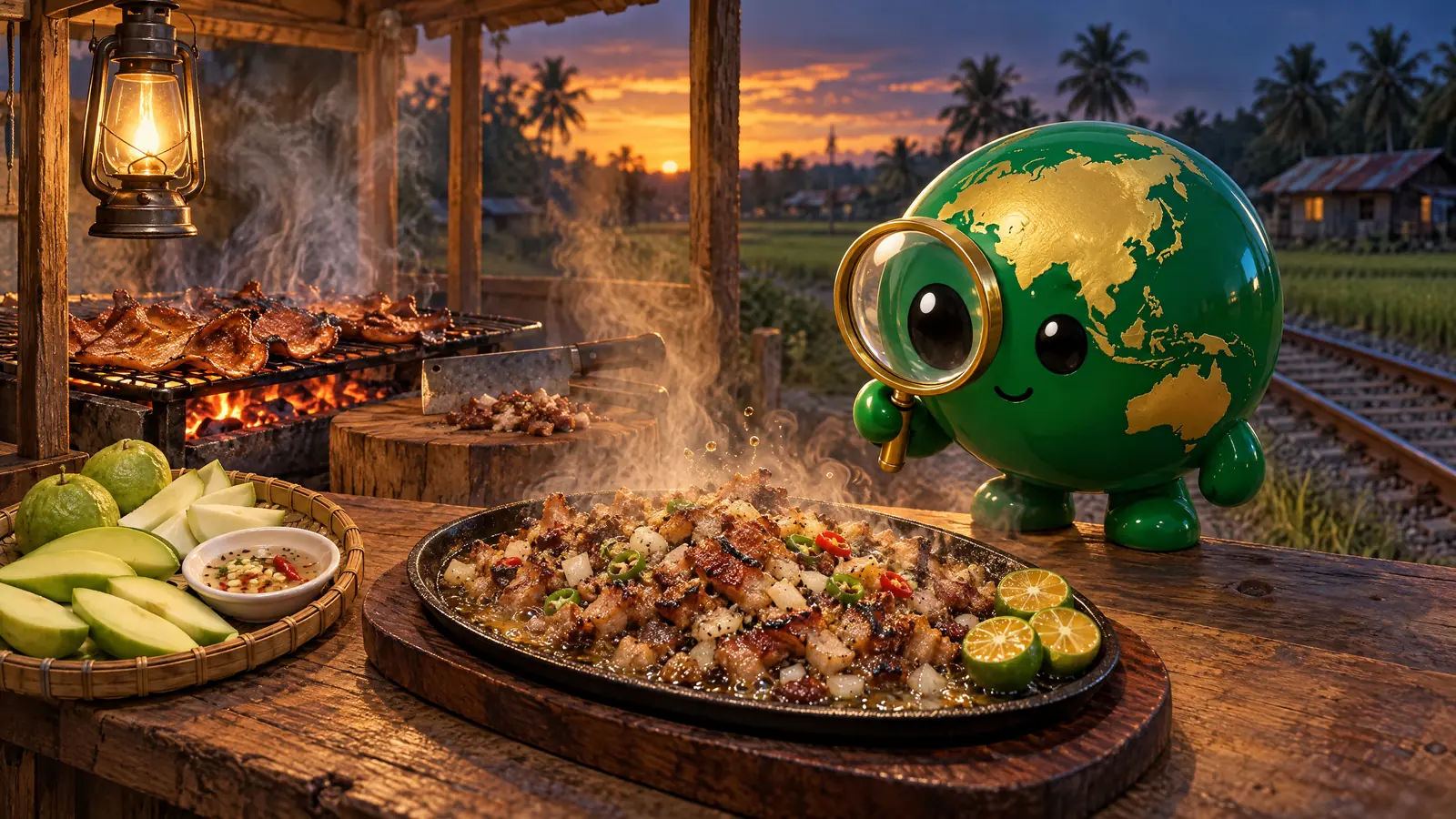
You think sisig is a sizzling pork dish. It started as a sour fruit snack. The word is older than the meat, older than the hot plate, and older than the restaurant that made it famous.
Sisig originated in the Philippines during the 1730s, first recorded not as a chopped pork plate but as a way to eat unripe guava with vinegar and salt. The word is tied to the Kapampangan term manisig, as in manisig manga, eating green mangoes dipped in vinegar. Over two and a half centuries, that sour snack picked up pork, charcoal smoke, onions and calamansi (a small Filipino citrus), then landed on a cast-iron plate that spits and crackles when it reaches your table. This is the story of how that happened.
The name: what it means and where the word came from
The earliest written record we have is from 1732. In that year, a Spanish Augustinian friar named Diego Bergaño published his Bocabulario de pampango en romance, y diccionario de romance en pampango, a dictionary of the Kapampangan language. He defined sisig as a salad of green papaya or green guava, eaten with a dressing of salt, pepper, garlic and vinegar. No pork. No sizzle. Just sour fruit.
In Kapampangan, the term manisig, as in manisig manga, refers to eating green mangoes dipped in vinegar, a phrase still used today. The same term later came to cover a way of preparing fish and meat, pork especially, marinated in a sour liquid such as lemon juice or vinegar, then seasoned with salt, pepper and other spices. Traditionally, these snacks were common in Kapampangan homes. Some sources say expectant mothers ate them to settle nausea. The thing called sisig was, for a long time, closer to a relish than to anything we would call a main dish.
Over the next two centuries, the meaning widened. At some point, the word began to cover chopped fish or meat dressed in vinegar or citrus. By the mid-twentieth century, sisig in Pampanga usually meant chopped pork with a sour seasoning. The fruit salad had become a meat dish, but the sour heart stayed the same.
Where it began: the place, the time, the people
Sisig came from Pampanga, a province on the island of Luzon in the Philippines. Pampanga sits on flat, fertile land in Central Luzon, and during the centuries of Spanish rule (1565 to 1898) its towns built strong markets for rice, sugar and livestock. Pork became common, and so did the habit of using every part of the pig.
Angeles City, in Pampanga, is now called the Sisig Capital of the Philippines. That title came late. Modern pork sisig originated in Angeles City, Pampanga, during the 1970s, but the sour sisig idea had been living in Kapampangan home kitchens for generations before any restaurant claimed it.
A rough timeline helps:
1700s: the word sisig appears in Kapampangan sources as a term for sour fruit relishes and snacks.
Late 1800s to early 1900s: sisig starts to refer to chopped meat or fish dressed in sour flavours. Nobody wrote down exact dates at the time, so we say this with care.
1960s to 1970s: sisig in Pampanga gains a strong link to grilled and chopped pig's head parts, sold near the railway crossing and near Clark Air Base.
The most recognised name in this history is Lucia "Aling Lucing" Cunanan, born 27 February 1928 in La Paz, Tarlac, who settled in Pampanga after her marriage. Lucia "Aling Lucing" Cunanan is credited with revolutionising sisig in the 1970s. She opened her eatery on Valdes Street in 1974 and served a version made from pig ears and cheeks, seasoned with calamansi juice and white onions, with mashed chicken liver stirred in for richness. Aling Lucing grilled pig parts and seasoned them with calamansi and onions for modern sisig. She refined and spread an existing local style. She did not invent the idea of sisig from nothing.
The setting mattered. Clark Air Base, a large American military installation, was active in Pampanga until 1991. American military commissaries discarded pig heads and other off-cuts during the Clark Air Base era. Local Kapampangan cooks used discarded pig parts to create modern pork sisig. The cheap supply of heads made pig-head sisig an everyday food, not a rare one. Stalls near the railway crossing in Barangay (a local district) Agapito del Rosario, along Burgos Street, fed jeepney (a shared passenger vehicle, the Philippines' common public transport) drivers, motorcycle riders and workers coming off shifts. Many Pampanga families tell their own origin stories. Many families, one dish.
Anatomy: what it is made of, or how it is done
The word sisig once meant a sour bite of green fruit. Today it means chopped meat or offal, cooked until parts are crisp and parts are soft, then dressed in a sour mix with onions and chilli, and served hot. The dish was originally made from pig head parts. Here is how each version works.
The old sour sisig: fruit, vegetables and vinegar
The oldest style was a sour salad. Green mango, green papaya or guava, cut up and mixed with vinegar, salt, pepper and garlic. Sometimes chilli. In Kapampangan homes, these were small bites before a meal, or snacks eaten with drinks.
At some point, blanched offal, pig's ears or tail, was added to the sour base. This made a bridge between the vegetable sisig and the meat sisig that came later. The fruit-and-vinegar style is rare in city restaurants today, but it still appears in home cooking and small eateries in the Pampanga countryside.
The grilled pork head sisig of Pampanga
The most famous sisig today uses parts of the pig's head: cheeks, ears and sometimes snout. In the Philippines, these face parts are sometimes called maskara. Sisig showcases the Filipino culinary value of nose-to-tail cooking, using all parts of the animal.
The head parts are boiled first to soften them and remove hair, then grilled over charcoal until they char and smoke. After grilling, the meat is chopped into small pieces and mixed with onions, chillies and calamansi juice or vinegar. Many Pampanga cooks add chicken liver, mashed finely, for a richer, darker flavour.
In traditional Pampanga sisig, there was no mayonnaise and no raw egg cracked on top. Those came later, in other places. The texture is a mix of crisp skin, soft fat and chewy cartilage, all in a single bite.
The sizzling plate and all the extras
Sisig is often served sizzling on a hot plate. The hot cast-iron plate entered the story in the late 1970s to early 1980s. Benedicto Pamintuan and Dan Tayag are both named by some Pampanga accounts among the early figures in the sizzling-plate presentation, in Angeles City and Manila around 1980, though, as this piece notes further on, the written record for who served it first is thin. Aling Lucing, who had first served her sisig on saucers, also switched to sizzling plates to keep the food hot.
Later add-ons arrived decade by decade. In the 1990s and 2000s, bars in Manila began cracking a raw egg on top, spooning mayonnaise for creaminess, and even melting cheese over the plate. Canned sisig, frozen sisig mixes and fast-food sisig bowls appeared in the 2000s, turning a bar snack into a packaged product. The taste and texture of those differ from a freshly grilled plate, but they carried the name further.
One thing, many homes: how each country or community made it its own
Sisig did not stay in Pampanga. Towns, cities and Filipino communities around the world now have their own version. All share the chopped-and-sour idea. None is a copy of the others.
Pampanga and Angeles City: heartland and "Sisig Capital"
Angeles City brands itself as the Sisig Capital of the Philippines. In 2017, City Ordinance No. 405 declared sizzling pork sisig as intangible cultural heritage of Angeles City. Sisig has become a symbol of Filipino cuisine and is celebrated in annual festivals in Pampanga.
Stalls along the old railway crossing in Barangay Agapito del Rosario still serve sisig to drivers and workers. Styles vary even within the city: some versions are wetter, heavy on calamansi and broth, others are dry and crisp. The chopped onion and chilli are always there. Several cooks and eateries claim to be the first to have served pork-head sisig commercially. We name the claims and take no side. The pride belongs to the whole community.
Manila and the bar food boom
Kapampangan cooks migrated to Metro Manila from the 1970s to the 1990s and opened eateries in the capital. In Manila's bars and music spots, sisig became a staple pulutan, food served alongside beer. Sisig is considered a quintessential pulutan, or food served with drinks in Filipino culture.
Manila is where mayonnaise, raw egg and chicharrón toppings spread widely. It is also where chicken sisig, tuna sisig and tofu sisig gained menu space, using the same chopped, sizzling, sour format but with different main ingredients. These are not lesser versions. They are sisig shaped by a different city's tastes and ingredients.
Filipino diaspora: sisig in California, Singapore and beyond
From the 1990s onward, sisig travelled with Filipino migrants and overseas workers to the United States, the Middle East and Southeast Asian cities. In Los Angeles and San Francisco, food trucks began selling sisig tacos, sisig fries and sisig rice bowls, combining Filipino flavours with local fast-food formats.
In Singapore, sisig appears in eateries in areas where Filipino workers gather, often adjusted for local rules: chicken or seafood sisig in halal spaces, for example. For many overseas Filipinos, sisig is less about strict tradition and more about a taste of home shared with friends from other countries. It is the same pattern that carried Hainanese chicken rice from migrant kitchens to national menus elsewhere in the region.
Fish, tofu and other new takes at home
Within the Philippines itself, cooks in Bicol, Cebu and other regions make sisig using bangus (milkfish), squid, mushrooms or tofu as the main item. Modern variations of sisig include seafood, tofu, and other plant-based ingredients. These versions keep the chopped style and the sour, often spicy dressing, which ties them back to the original meaning of sisig even when pork is missing. Some families choose tofu or fish sisig for cost, health or religious reasons. They still call it sisig, because the method and the flavour say so.
From the stall to the world: how it spread
Sisig traces a path from Kapampangan homes to global menus, carried by transport routes, working families and, later, by screens.
Railways, air bases and roadside grills
The Manila North Road and the old railway line through Pampanga were the first channels. Roadside grills at stops and crossings fed drivers and passengers with cheap, filling food. Clark Air Base, expanded after the Second World War, created demand for night-time food stalls where sisig was sold to Filipino workers and visitors. The cheap supply of pig-head parts from nearby markets and commissaries kept the price low. Sisig spread first within Central Luzon, from small stalls, not from restaurants with tablecloths.
Overseas workers and family cooking in luggage
Filipino nurses, seafarers and contract workers began settling in the Gulf states, East Asia, Europe and North America from the 1970s onward. They opened small eateries and turo-turo (point-to-point) counters, where sisig joined adobo and pancit on the menu. Ingredients were swapped when needed: local citrus instead of calamansi, different cuts of pork, chicken where pork was harder to sell. This quiet, everyday spread through work and family life carried sisig across more borders than any single chef or television show, the same way Vietnam's phở travelled abroad through families rather than through any one restaurant.
Cookbooks, TV, YouTube and award lists
From the 1990s and 2000s, Filipino cookbooks in English began to include sisig recipes, making this iconic Filipino dish visible to non-Filipino readers. Food television programmes and online videos later showed sizzling sisig to a wider audience, focusing on the sight and sound of the hot plate. International food websites have listed sisig among the must-try dishes of the Philippines, sending travellers to look for it on arrival. Canned sisig and instant sisig mixes on supermarket shelves also played a role, giving people a first taste at home, far from any grill.
More than a dish: what it means to people today
Sisig holds stories of thrift, skill and the habit of making something good from parts other cooks threw away. That is why the history matters beyond the taste.
Kapampangan pride and national symbol
For Kapampangans, sisig is a badge of cooking skill. It is often the first dish offered to guests as proof of what Pampanga can do with simple parts. Local writers and food groups view sisig as central to Pampanga's claim of being the culinary capital of the Philippines. On a wider scale, many Filipinos now see sisig alongside adobo, lechon and sinigang as one of the dishes that stand for the country.
Comfort food, street food, party food
Sisig sits in many roles at once: bar snack with beer, ulam (viand) with rice, party plate at birthdays and office gatherings. Sisig is a popular comfort food in the Philippines. For overseas Filipinos, a sizzling plate in a foreign city can bring strong memories. Even canned sisig, while not the same, sells as a quick way to reach that feeling. Younger diners see sisig as a social dish to share on a table, not a solo meal, which keeps it in the centre of the group.
Many claims, one shared plate
The contested parts of sisig history are real. Who recorded the word first? The early Kapampangan vocabularies answer that. Who made pork-head sisig first? Several Pampanga families claim credit, and the records are mostly oral. Who served it on a sizzling plate first? Benedicto Pamintuan and Dan Tayag are both named, with dates around 1980. Written evidence for these events is thin, and we cannot crown a single inventor.
That is fine. Sisig grew because many people tried it, shared it and changed it. Your favourite version, whatever it is, sits inside this long, shared story, one entry in Backstory Asia's record of Southeast Asian food origins. If you like reading about where food really comes from, join the Backstory Asia email list for one new origin story each week.