You thought Tiger Beer was a pure Singapore invention, the kind of locally brewed beer that belongs to zi char tables and hawker centres. The twist: Tiger was born in Singapore, yes, but the creation of Tiger Beer resulted from a joint venture between Fraser and Neave and Heineken, a Dutch brewer, back in 1931.
Here is the direct answer. Tiger Beer was founded in 1932 in Singapore. A company called Malayan Breweries Limited brewed the first batch that year. Malayan Breweries took the name Asia Pacific Breweries in 1990, and Asia Pacific Breweries merged into Heineken Asia Pacific in 2013; Heineken Asia Pacific brews Tiger today. Tiger Beer has been produced for over 90 years. The brand passed through several corporate hands and today sits inside Heineken Asia Pacific. After about 96 years of large-scale brewing in Singapore, Heineken Asia Pacific says ageing brewing and packaging equipment at its Tuas site means large-scale brewing of Tiger Beer will stop in Singapore by the end of 2027, with about 130 production jobs affected and most output moving to plants in Malaysia and Vietnam. Still, the brand keeps its Singapore roots in every label and campaign.
We are Backstory Asia. We tell the history of where things in this region came from. This is the story of a lager that started as a business deal and ended up on plastic tables across the world.
The name: what it means and where the word came from
Names on beer bottles are chosen to travel well, to feel strong in many languages and to stick in your head after one look. Tiger is a good example.
In 1930s British Malaya, the tiger was the most powerful animal in the jungle. It was familiar to people who lived near rubber estates and forests. It was also exotic to European drinkers who had never seen one outside a zoo. Malayan Breweries picked a name that would travel: short, easy to print on a label, and carrying a clear image of strength.
Early labels looked more like a zoo poster than a photograph of a real Malayan tiger. The animal sat among palm trees and decorative borders. Over the decades the logo became more stylised, sleeker, closer to an icon than an illustration.
One thing stayed the same everywhere: the word "Tiger" remained in English in every market where it sold. That helped fix the brand name globally. No translation, no confusion, one word everywhere.
Slogans leaned into the animal meaning. "It's Time for a Tiger" has run since the 1930s, not long after the beer itself launched. Later came the "Uncage your Tiger" platform. In 2024, the campaign "You Never Roar Alone" built on that platform, with the same idea of courage and company. Each slogan tied the name back to what a tiger means: something bold, alive, hard to ignore.
Where it began: the place, the time, the people
Singapore in the late 1920s was a British port city, hot and humid, full of sailors, office clerks and dock workers. The beer they could find was mostly imported British ales and stouts, expensive and quick to spoil in the heat. European brewers saw an opportunity.
In 1931, Fraser and Neave, a Singapore company that made soft drinks, joined hands with Heineken from the Netherlands. Together they formed Malayan Breweries Limited.
Heineken brought brewing know-how, yeast strains and quality control. Fraser and Neave brought local capital and distribution lines across Singapore and Malaya. The result was a brewery built for the tropics.
The first batch of Tiger Beer rolled out in 1932.
Competition came quickly. In 1933, Archipelago Brewery launched Anchor Beer from a site also on Alexandra Road. The British seized the brewery in 1941 as enemy property over its German ties; Malayan Breweries later bought it.
In 1990, Malayan Breweries was renamed Asia Pacific Breweries (APB). Much later, Heineken completed its acquisition of APB in 2012, integrating Tiger Beer into its global portfolio. The parent became Heineken Asia Pacific, but the Tiger label stayed rooted in Singapore in people's minds.
Anatomy: what it is made of, and how it is brewed
Tiger Beer is a pale lager. That means a light-coloured beer made with bottom-fermenting yeast at cool temperatures, then cold-stored to smooth the flavour. The process was adjusted here for the tropics: clean taste, firm carbonation, moderate alcohol at about 5 percent by volume, not too heavy on hops.
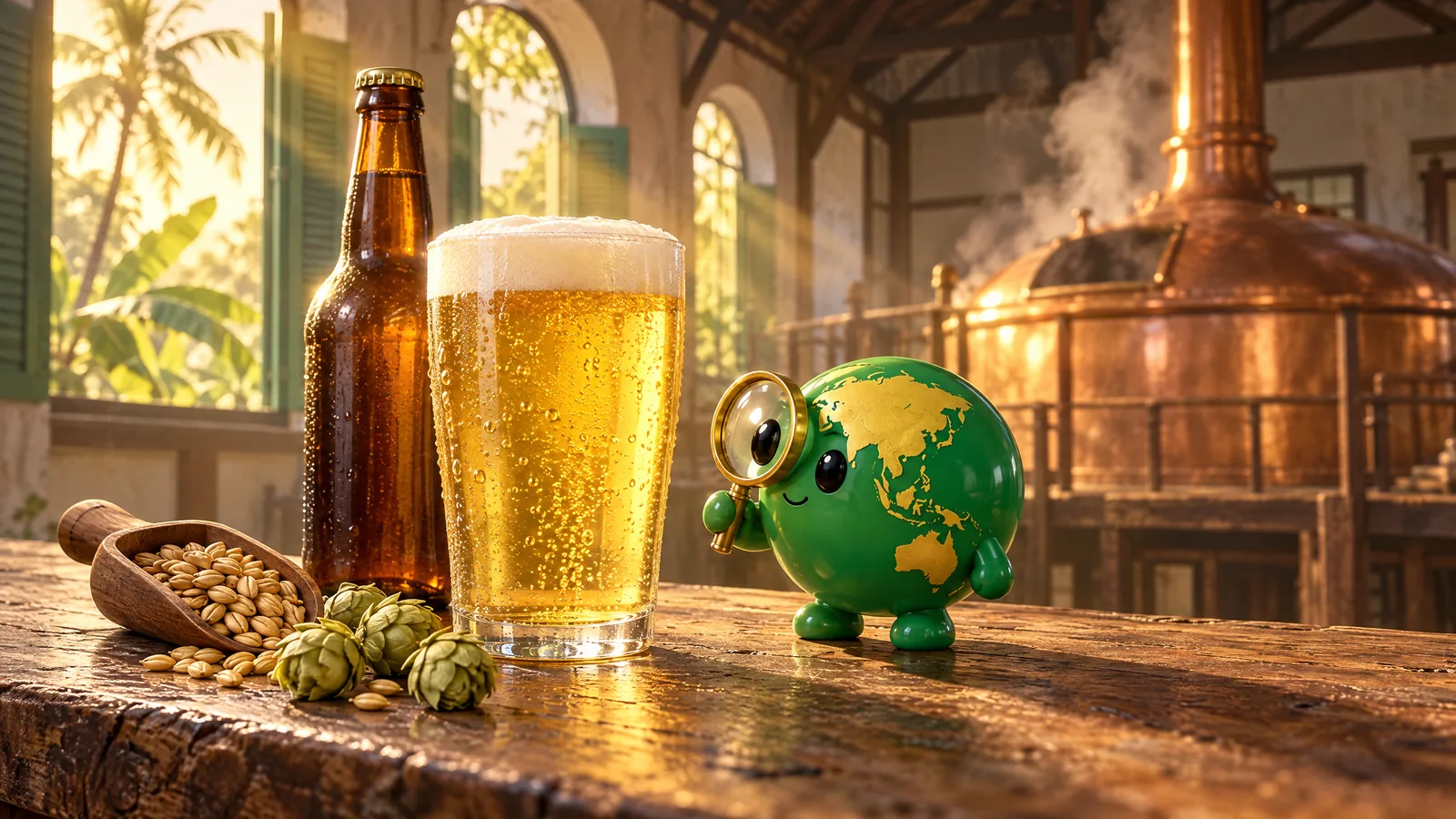
The ingredients are simple: water, malted barley (grains that are soaked and dried to turn starch into sugar), hops or hop extract (flowers that add bitterness and smell), and sugar. Yeast does the fermenting but is usually filtered out before bottling.
Brewing goes like this. Crushed malt is mixed with warm water to make a sweet liquid called wort. That liquid is boiled with hops. It is then cooled and moved into large tanks where yeast is added. The yeast works at the bottom of the tank, slowly turning sugar into alcohol. After fermenting, the beer is cold-stored for days or weeks, a step called lagering, which gives it a refreshing, smooth finish. Finally it is filtered and put into bottles or cans.
A facility was later built at Tuas in Singapore. Today, Tiger Beer is produced at Tuas.
The beer is known for its distinctive taste and aroma, and quality has been recognised over the years. Tiger won gold medals at the World Beer Cup in 2004 and 2010, among more than 40 international awards.
Tiger Beer's lineup has grown to include Tiger Crystal, Tiger White, Tiger Radler and Tiger Soju. Tiger Crystal is lighter and more filtered, at about 4.2 percent alcohol. Tiger Radler, a lemon-flavoured variant launched in 2013, sits at about 2 percent. All build from the same lager base but adjust alcohol and flavour for new drinkers.
One beer, many homes: how each place made it its own
Tiger Beer started in Singapore but it quickly became a shared lager across Malaya, then across South East Asia and beyond. Each city built its own memory around the blue bottle.
In Singapore, Tiger is the lager you find in kopitiams (coffee shops), zi char places (Chinese seafood eateries), coffee shops under HDB blocks (public housing, where most Singaporeans live) and at National Day gatherings. Tiger Beer is a popular lager in Southeast Asia, and Singapore is where that story is most personal.
In Malaysia, Tiger was common long before Singapore's full independence. Malayan Breweries served the whole of Malaya. You could find Tiger in Chinese restaurants in Penang, KTV lounges (bars with private karaoke rooms) in Kuala Lumpur, and seafood spots in Johor Bahru, sharing fridge space with Anchor and Carlsberg. It is also brewed by Heineken Malaysia.
In Vietnam, Tiger arrived in 1993, when Asia Pacific Breweries launched its first Vietnam brew in Ho Chi Minh City. Saigon drinkers met it as a premium beer on street-side plastic stools and in bars. Much of it was produced regionally, but it carried the Singapore link on every label.
In China and Hong Kong, Tiger appeared first in Chinatowns, then in supermarkets and bars. It was marketed as a "Singapore beer," tied to images of the skyline. Tiger Beer is sold in more than 60 countries worldwide, and in many of those markets it sits in the Asian premium segment.
In Europe, Australia and the United States, Western drinkers often first met Tiger at Asian restaurants. It appeared next to satay, chilli crab and Hainanese chicken rice. Many families, one beer. Each place tells the Tiger story a bit differently, but the label and the crisp taste line up, giving migrants and travellers a shared point.
From the brewery yard to the world: how it spread
Tiger did not spread by ads alone. It moved with sailors, soldiers, students and migrants, and later with global marketing budgets.
The parent company was renamed Asia Pacific Breweries in 1990, and production later moved to a new Tuas brewery. The brand built a global footprint, winning recognition at world beer competitions along the way.
Iconic campaigns helped. "It's Time for a Tiger" has run since the 1930s. The "Uncage your Tiger" platform tied the brand to night markets, street food and street art across Asia. Tiger signs appeared in Singapore films and on metal plates in coffeeshops. The Tiger Brewery Tour at Tuas has drawn visitors for years.
The corporate change came in 2012 when Heineken bought out Fraser and Neave's stake, bringing Tiger fully into the Heineken group. In 2013, APB merged into Heineken Asia Pacific. Tiger remained the flagship brand. Then in March 2026, Heineken Asia Pacific announced that the Tuas facility would be winding down, with large-scale brewing set to close by end 2027. Production will continue at plants in Malaysia and Vietnam. About 130 production jobs in Singapore are affected. Brand leadership and many decisions remain based in Singapore, but the change marks the end of a long chapter of local brewing on the island.
More than a beer: what Tiger means to people today
Tiger Beer carries more than alcohol. It carries memories of after-work drinks, reunion dinners and late-night suppers from Toa Payoh to Tampines.
It is a symbol of Singapore's port-city past: founded under British rule, powered by Dutch brewing, enjoyed by dock workers, taxi drivers, bankers and students. Even as Singapore changed around it, Tiger stayed in coffee shops and the void decks under HDB blocks (the open ground floor of public housing), a quiet commitment to the everyday.
For the Singapore and Malaysian Chinese diaspora, a bottle of Tiger in London, Vancouver or Melbourne is a shortcut to home taste, often ordered close to chilli crab or satay. It is a way to find something familiar far from the equator.
Younger drinkers meet Tiger now in sleek bars, at music festivals, and through limited-edition cans designed with local artists. The brand keeps trying new things while holding on to the same blue label.
There are mixed feelings about brewing shifting away from Singapore. There is pride that a beer created here reached more than 60 countries. And there is a small sadness that the city may no longer smell of malt on certain mornings near Tuas. Tiger Beer shows how a business deal between a Dutch brewer and a local soft drink maker can, over time, become part of many people's stories at plastic tables across Asia.
If you like stories like this, join the Backstory Asia email list. One origin story a week, nothing else.