
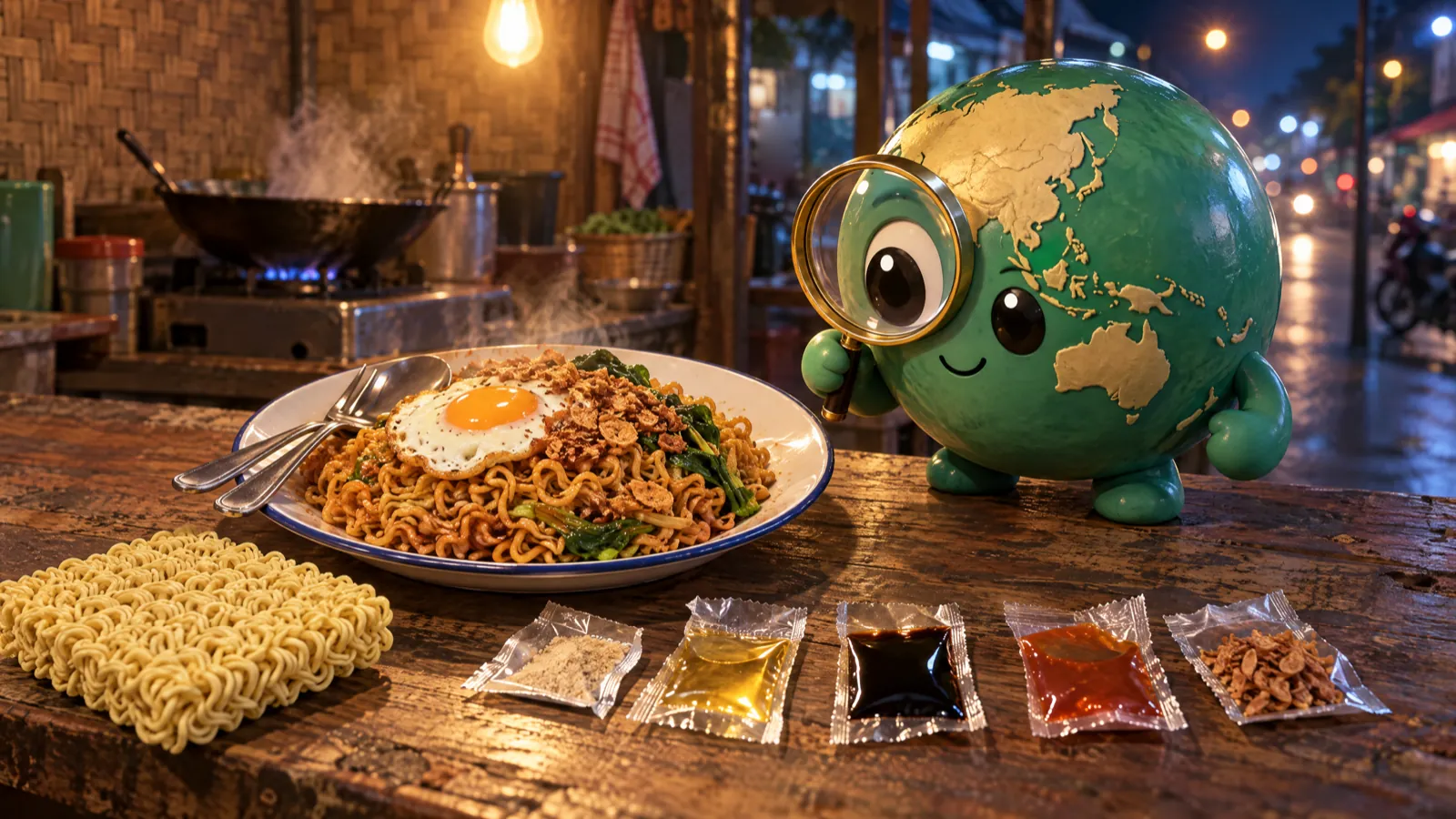
You think Indomie is just a cheap packet of noodles. It is a fifty-year-old story about trade, taste, and people who moved across oceans. Indomie was created in Indonesia in 1972 by a small Jakarta company called PT Sanmaru Food Manufacturing. It started as one chicken-flavoured instant noodle for factory workers and students who needed a fast, filling meal. Today, Indomie noodles are sold in over 80 countries worldwide, and the brand produces roughly 19 billion packs a year. That is not a snack. That is a staple.
The name: what it means and where the word came from
"Indomie" is not a word you will find in a dictionary. It is a brand name, owned by PT Indofood Sukses Makmur, the Indonesian food company. But the word has a clear meaning if you break it apart. Indomie is a portmanteau of "Indo" for Indonesia and "mie" for noodles. The word "mie" (sometimes spelled "mi" or "mee") is often traced to Hokkien Chinese, the dialect spoken by traders who settled across Southeast Asia centuries ago; Indonesian dictionaries more simply call "mie" an older spelling of "mi". In Mandarin the word is "mian". All three spellings point to the same thing: wheat noodles.
You hear "mee" all over the region. In Singapore and Malaysia, "mee goreng" means fried noodles. In Indonesia, "mi instan" means instant noodles. Long before the packet, laksa brought noodles and spice paste together in Peranakan port kitchens.
Outside Indonesia, something interesting happened. Many fans started using "Indomie" as a shorthand for any instant noodle, the same way some people say "Maggi" in Malaysia or "Cup Noodles" in Japan. But in law, Indomie remains a private brand.
Where it began: the place, the time, the people
Jakarta in the early 1970s was growing fast. Factories needed workers. Universities needed dormitories. Everyone needed cheap food. Instant noodles had already arrived from Japan, inspired by Momofuku Ando's invention of the first instant ramen in 1958. But imported noodles were expensive and flavoured for Japanese kitchens, not Indonesian ones.
PT Sanmaru Food Manufacturing, a small Jakarta company, launched Indomie's first product in June 1972: Indomie Kuah Rasa Kaldu Ayam, a chicken broth soup noodle. The taste was designed to feel Indonesian from the start, not Japanese. That was the point.
The brand was backed by Sudono Salim's Salim Group in Indonesia, the powerful business family that also controlled Bogasari, the flour mill that held a state-granted monopoly on flour milling. In 1984, PT Sanmaru was acquired by PT Sarimi Asli Jaya, which was owned by the flour miller Bogasari, tying the noodle maker to its own flour supply. In 1994, Sanmaru, Sarimi Asli Jaya and several other food companies merged into one entity: PT Indofood Sukses Makmur, the company that owns Indomie today. Anthony Salim, Sudono's son, is Indofood's president director now.
One more name belongs in this story. Ibu Nunuk Nuraini, born in 1961, was a food scientist who joined Indofood's flavour department in Jakarta. Ibu Nunuk is known as the "mother of Indomie". In 1982, she created the seasoning blend for Indomie Mi Goreng, the dry fried noodles variant that would become the brand's most famous product. She worked quietly in the test kitchen for nearly 30 years, developing flavours like chicken curry, rendang, soto, green chilli, and salted egg. She passed away on 27 January 2021, and her story was told by news outlets around the world.
Production started in one Jakarta factory. As demand rose through the 1980s, PT Sanmaru opened more plants across Java. The brand kept growing because it kept tasting like home.
Anatomy: what it is made of
Open a pack of Indomie and you find two things: a block of noodles and a handful of small sachets. Each part matters.
The noodle block is made from wheat flour. In the early years, much of that flour was imported. Later, local sourcing through Bogasari mills made the supply chain shorter. The block is deep-fried in palm oil, which dries the noodles quickly and preserves them, so they keep well on a store shelf and cook quickly once you add hot water.
The sachets are where the real character lives. Indonesians call them "bumbu", meaning seasoning. A typical pack includes a powder sachet with salt, stock powder, dried garlic, and onion. Then there is an oil sachet, flavoured with garlic, onion, chilli, or sometimes curry leaves. For Mi Goreng variants, a sachet of sweet soy sauce (called kecap manis in Indonesian) adds sweetness. Some packs also hold a chilli sauce or sambal sachet for heat, and a sprinkle of fried shallot flakes for crunch.
The seasoning packets of Indomie are known for their intensely savoury, sweet, and umami flavours. That combination is what makes Indomie Mi Goreng, of course, the standout. The noodle is boiled, drained, and tossed with the sauces. It eats like fried noodles, not soup, even though it comes from a packet. Indomie introduced Mi Goreng in 1982, a fried noodle variant without broth, and it was a genuinely new idea at the time. Indomie gained popularity for its "mi goreng" flavour, and in 2025 The Ramen Rater, a long-running noodle-review site, ranked Indomie Mi Keriting Goreng Spesial ninth on its global Top Ten Instant Noodles list.
Over the decades, the brand added many flavour series. Some copy traditional Indonesian dishes: soto (a turmeric-based soup), rendang (slow-cooked spiced beef), kari ayam (chicken curry), ayam bawang (garlic chicken). Others belong to regional "taste tour" lines that claim to reproduce the cooking of specific provinces like Aceh, Makassar, or Padang.
Even the packaging became recognisable. The red, green, and white Indomie logo, introduced in the 1980s and now seen worldwide, sits above a serving-suggestion photo on every pack. That photo shapes how millions of people imagine the dish before they cook it.
One thing, many homes: how each region or community made it its own
Indomie is one industrial product. But people everywhere bend it to their own habits, and that bending created many local Indomie cultures.
In Indonesia, small food stalls called warungs serve Indomie with a fried egg, sliced sausages, vegetables, or corned beef on top. A special type of stall, the "warmindo" (short for warung Indomie), specialises in serving Indomie dishes. Boarding-house students, bus drivers, and night-shift workers have long made it a familiar late-night meal. Regional favourites took shape too. In Java, Indomie Kuah Rasa Soto, a soupy version flavoured like soto, is a comfort staple. In Sumatra, spicier Aceh-style flavours suit a different palate.
Indomie became a cultural staple in Nigeria after being introduced in 1988. Nigerian families cook it with eggs, vegetables, and corned beef, or turn it into "Indomie stir-fry". The brand developed flavours just for West Africa, like a chicken pepper-soup style. Many Nigerians now connect Indomie to childhood, school tuck shops, and after-school snacks, even though the brand began on a different continent.
In the Middle East, factories were built to supply halal-certified noodles tuned to local spices. Indonesian migrant workers in the Gulf brought their favourite flavours along, and households in Saudi Arabia or the UAE break noodles into soups or stews with extra seasoning.
In Singapore, Malaysia, and Brunei, Indomie sits on store shelves next to local brands like Maggi and Mamee. Some families prefer Indomie Mi Goreng for its sweet soy taste. Student hostels across the region are places where brand loyalties form over shared late-night suppers.
The global diaspora carried it further. Indonesian students in Australia, the United Kingdom, and the United States introduced Indomie to dorm kitchens from the 1990s onward. YouTube and TikTok "Indomie hacks", where people mix the noodles with cheese, Korean chilli paste, or a fried egg, turned it into a fusion comfort food. Many families, one noodle.
From the stall to the world: how it spread
Indomie started as a domestic Indonesian product in the 1970s. By the early 1980s, it was a regional export. By the mid-1990s, it was becoming a global brand.
Early shipments went to neighbouring countries like Singapore, Malaysia, and Brunei. The first buyers overseas were Indonesian migrant workers and students who already knew the taste and asked for it at speciality grocery shops. That small, loyal demand opened the door.
The move into Africa changed the scale entirely. A local factory for Indomie opened in Nigeria in 1995 through a partnership with Dufil Prima Foods, a joint venture between Singapore's Tolaram Group and Indonesia's Salim Group. It was the first instant-noodle factory of its kind in Nigeria, and the largest in Africa, cutting shipping costs and tariffs and making Indomie affordable for a much larger market. From Nigeria, the brand spread to Ghana, Benin, and other West African countries. The problem of price, which had kept imported noodles out of reach for many, was solved by making them locally. Indomie has expanded significantly in Africa and the Middle East beyond its initial markets.
In the Middle East, Indomie has been made in Turkey since 2010, serving both local consumers and Indonesian workers there. Ports like Jeddah and Dubai became hubs where boxes of Indomie moved onward to East Africa and South Asia. Halal certification and region-specific flavours made the product feel local.
Retail channels widened steadily. Minimarts and petrol station shops carried Indomie first. Then big supermarket chains in Europe, North America, and Australia placed it in their "international" aisles. In the 2010s, online platforms and bulk-buy websites made it easy for fans to order whole cartons. Indomie is produced in several countries to meet global demand.
Pop culture helped too. When Ibu Nunuk Nuraini passed away in 2021, the BBC and other outlets told her story, calling Indomie Mi Goreng a "cult favourite". In Nigeria and Indonesia, music videos, memes, and fan-made songs gave the brand an informal advertisement loop that no marketing budget could buy. By the 2010s, in many places, Indomie was not just an ethnic import. It was a mainstream pantry item, often cheaper than local instant noodles.
More than a dish: what it means to people today
Most people see Indomie as a cheap snack. Its history tells a bigger story about migration, industrial food, and a shared taste that crosses continents.
For Indonesian migrants and students, Indomie is a taste of home. It fits in a suitcase. It cooks in a kettle or a rice cooker. It smells like the kitchen they grew up in. For Nigerians, it is the delicious after-school meal, the tuck-shop packet, the thing that tastes like childhood. The brand began far away, but the feeling of it belongs to them too.
In Indonesia, Indomie sits in two worlds at once. It is the end-of-the-month meal for families watching their budget, and it is the nostalgic midnight snack for office workers who remember university. Campus stories are everywhere: late-night exam cramming fuelled by packets shared in dorm kitchens, where a factory food became part of social bonding.
Creative culture has grown around it. Fan artwork and clothing use the Indomie logo. Cafés in Jakarta and Lagos sell "elevated" Indomie dishes with extra toppings. Street vendors specialising in warmindo-style noodles turn a packet product into a stage for small business and personal cooking flair.
The deeper history of Indomie is not about one country winning a claim. It is about shared ownership in feeling. Indonesians, Nigerians, Middle Easterners, Southeast Asians, and diaspora communities everywhere see a piece of themselves in this noodle. Every time you tear open a pack, you hold fifty years of trade, taste, and quiet kitchen work in your hands.
If you like stories like this, join the Backstory Asia email list. One origin story a week, nothing else.